
Last updated November 21, 2026
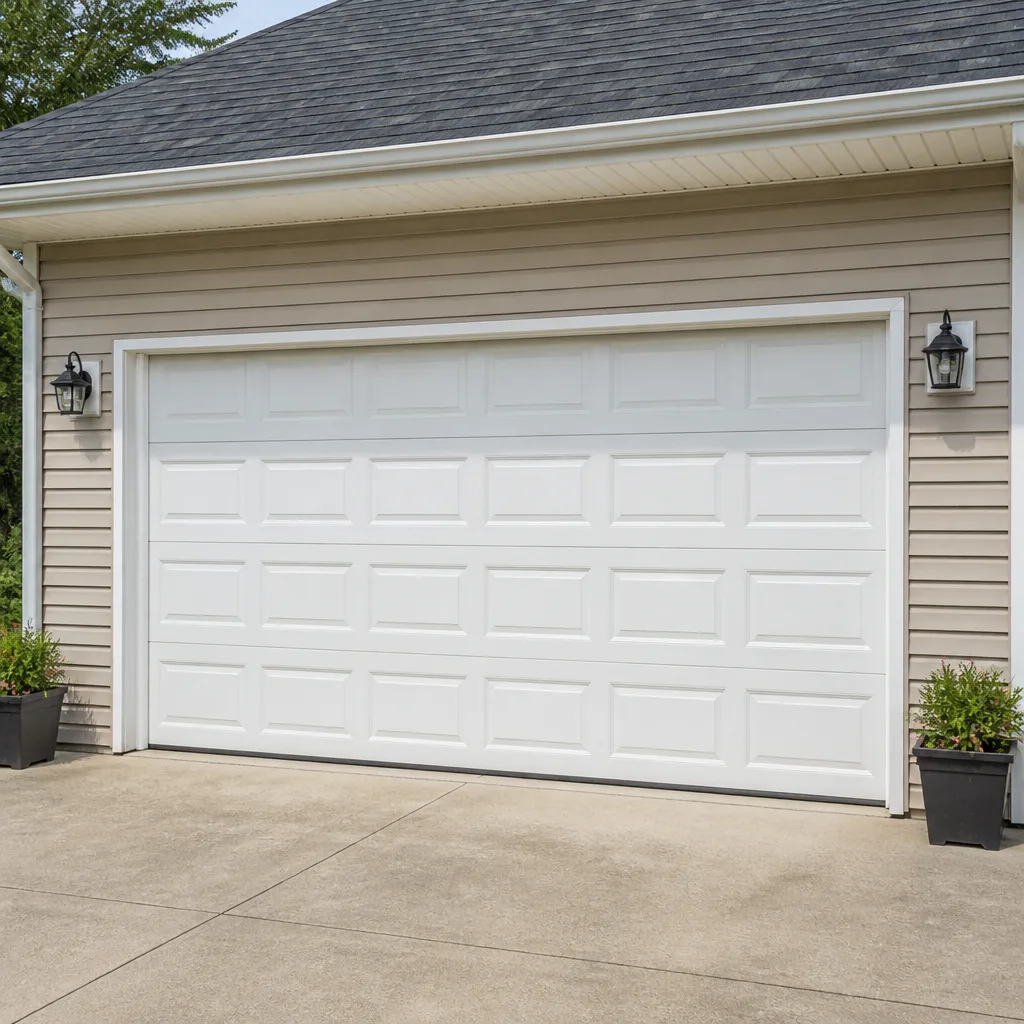 Raised-panel steel
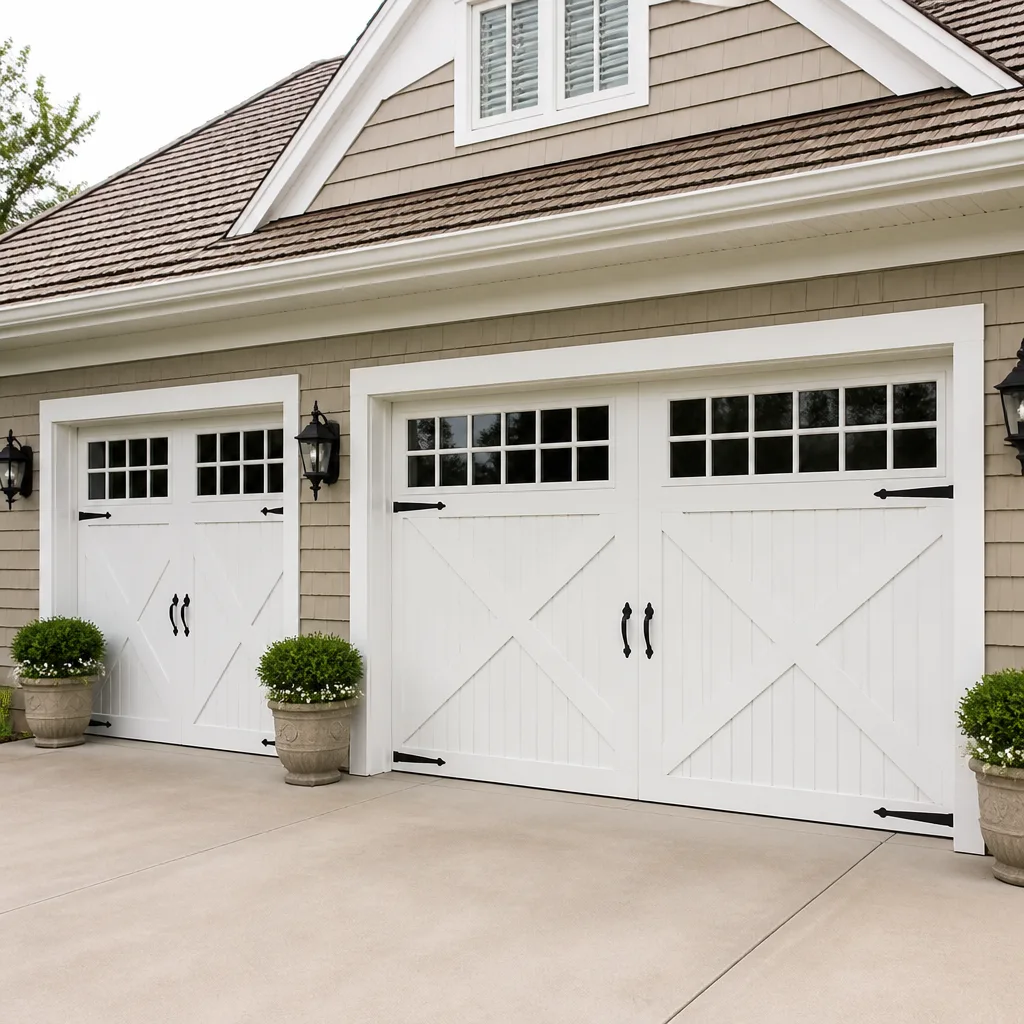 Carriage house
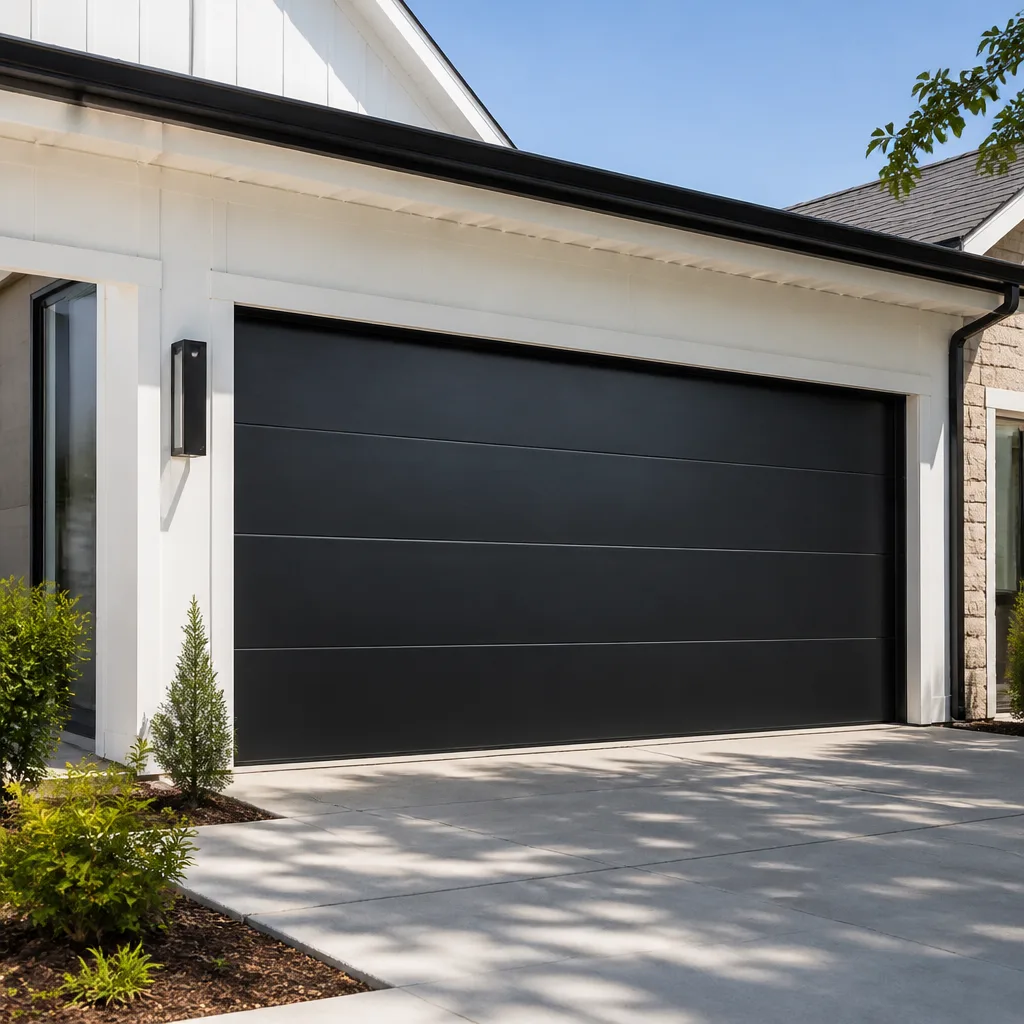 Modern flush
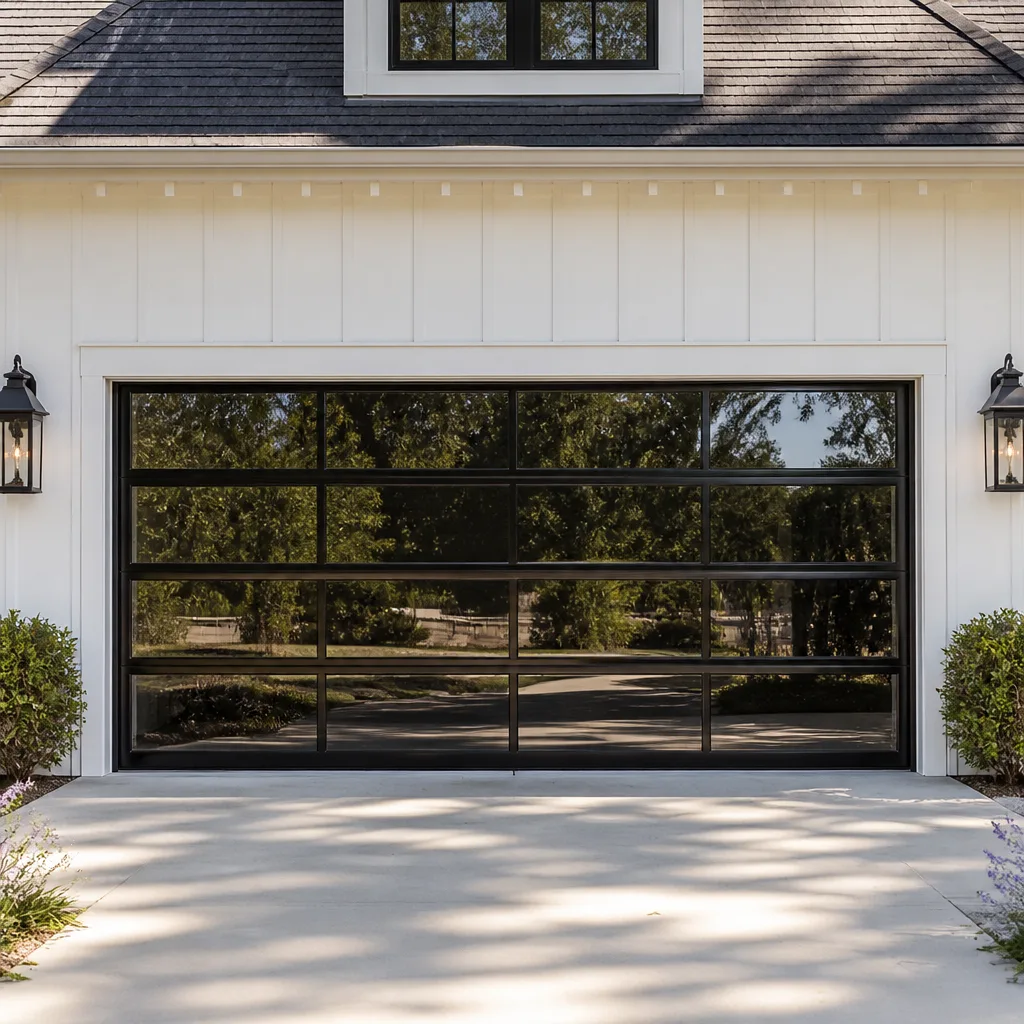 Full-view glass
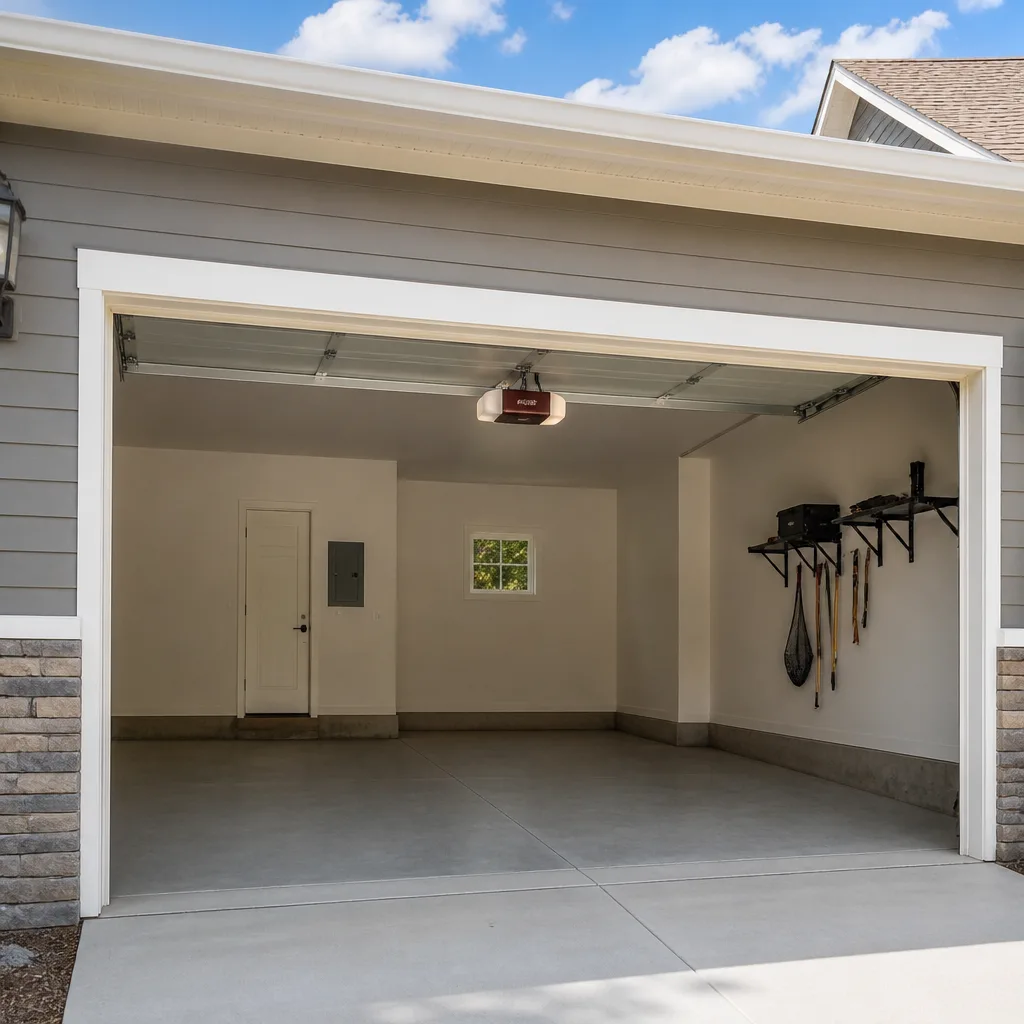 LiftMaster openers
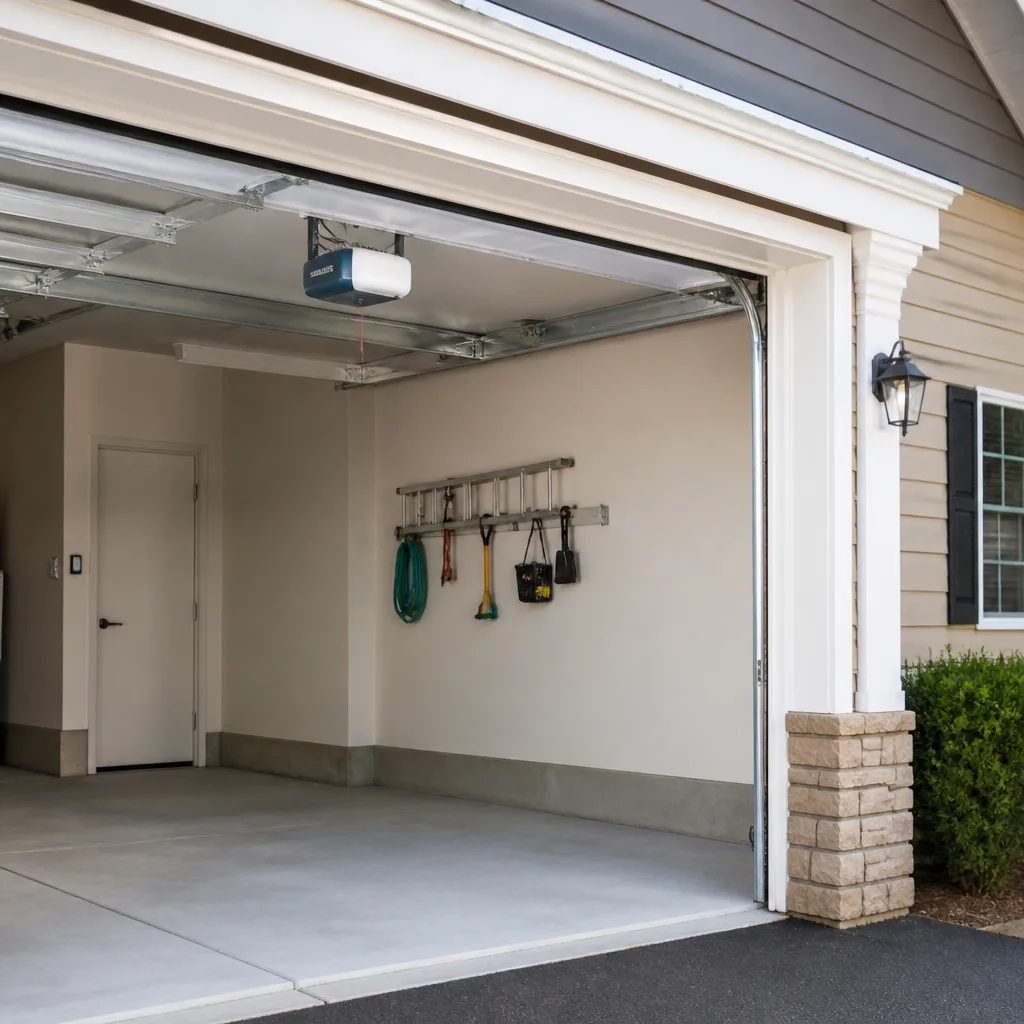 Chamberlain openers
Full 25-point door and opener safety check with every visit - springs, cables, rollers, tracks, and your LiftMaster or Chamberlain opener included
You get a price before we start. It does not change when the pro arrives.
Get your free estimateDIY vs Professional Garage Door: The Woodside Homeowner’s Decision Guide
Most garage door advice splits into two camps: “never touch it, call a pro” or “it’s easy, watch a video.” Neither is honest. A garage door is a system of parts that carry different levels of risk, and the useful question isn’t whether you’re handy enough. It’s which specific task you’re standing in front of. Torsion springs store enough energy to send a person to the hospital when they release wrong. Weatherstripping and sensor alignment don’t. This guide maps the whole spectrum for Woodside homeowners, task by task, cost by cost, so you know exactly where to draw your own line.
Quick Answer
In Woodside, do the safe tasks yourself: weatherstripping, lubrication, sensor alignment, and visual inspection. Call a professional for spring replacement, cable replacement, panel swaps on a door with a torsion system, and any repair where the door is off-track or the hardware is under tension. The dividing line isn’t skill level. It’s stored energy. If a part holds the door’s full weight or has tension wound into it, that’s a pro job.
Styles & brands we work with
- Raised-panel steel
- Carriage house
- Modern flush
- Full-view glass
- LiftMaster openers
- Chamberlain openers
Table of Contents
- The Task-by-Task Safety Matrix
- What You Can Safely Do Yourself
- Where Caution Lives: Panel Swaps and Opener Programming
- What Should Never Be DIY
- The Real Cost Comparison in Woodside
- Why Woodside’s Layout Changes the Math
- NYC Liability, Permits, and Resale
- How to Be a Smart DIYer
The Task-by-Task Safety Matrix
Every garage door job falls into one of three bands. We’ve watched homeowners handle the first band for years without trouble. The second band goes fine until it doesn’t. The third band is where people get hurt, and it has nothing to do with how competent they are.
Band one: safe for a homeowner.
- Replacing bottom weatherstripping and side seals
- Lubricating hinges, rollers, tracks, and the torsion bar with a proper garage door lubricant
- Wiping and aligning photo-eye safety sensors
- Testing the door’s balance by hand (lift it halfway and let go; a healthy door stays put)
- Testing the auto-reverse by placing a roll of paper towels under the closing door
- Tightening loose hinge and bracket bolts
Band two: caution, competence required.
- Swapping a single damaged panel on a sectional door
- Programming a remote or keypad on a LiftMaster or Chamberlain opener
- Replacing a wall-mount control button
- Adjusting the opener’s travel limits
- Replacing rollers, one at a time, with the door fully closed and locked
Band three: never DIY.
- Replacing torsion or extension springs
- Replacing cables or drums, which hold the door’s full weight under tension
- Adjusting or unwinding a torsion spring
- Replacing a cable that has snapped and left the door hanging
- Any repair on a door that has come off its track or twisted in its frame
The pattern is simple once you see it. Band three is everything that stores or holds energy. A torsion spring on a typical Woodside door holds enough force to lift the door’s full weight, and that force doesn’t know you’re careful. It releases the same way whether you’ve done it once or a hundred times.
What You Can Safely Do Yourself
This is the part of the list worth keeping on your own calendar. Most of it costs under twenty dollars in parts and takes an afternoon at most.
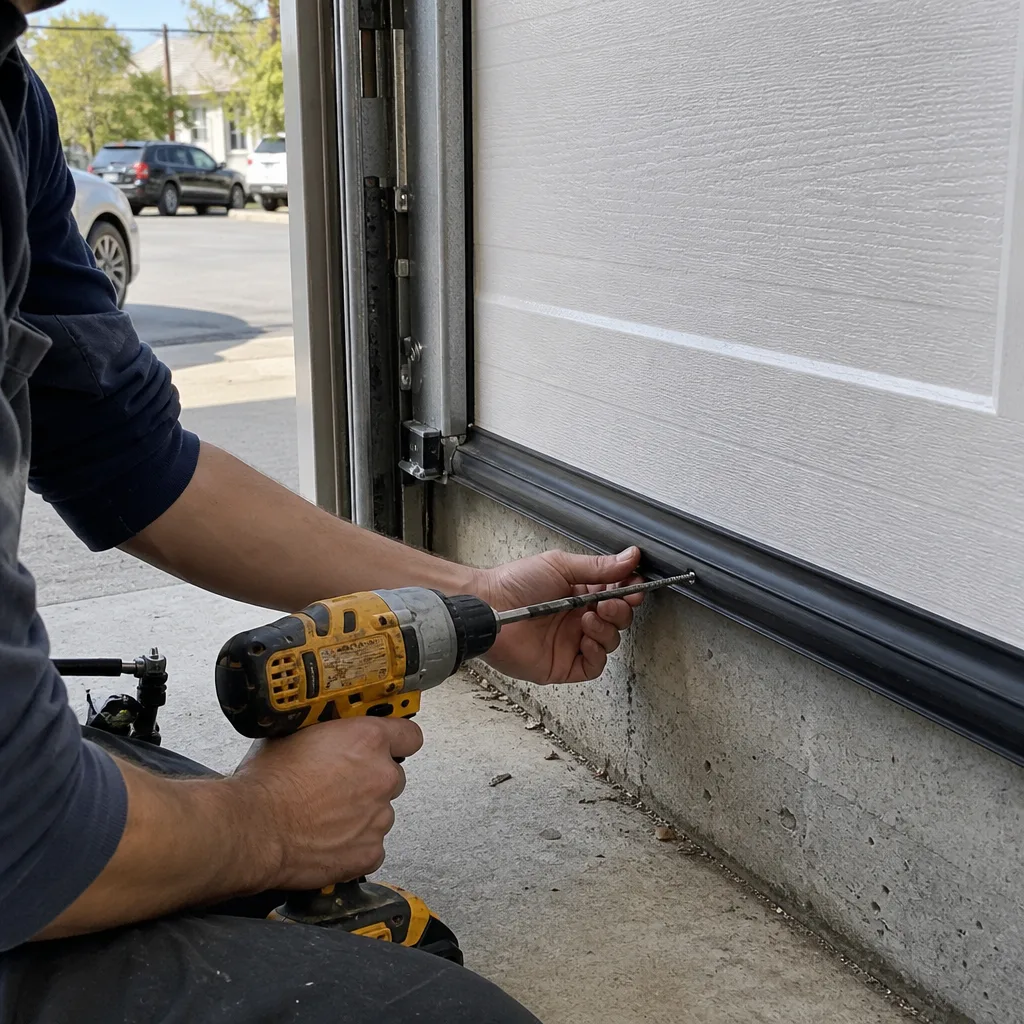
- Replace the bottom seal. A cracked, flattened bottom weatherstripping lets drafts, rainwater, and, in Woodside, small pests inside. Slide the old one out of the retainer, cut the new one to length, and push it in. Fifteen minutes.
- Lubricate moving parts. A dry door shrieks. Use a garage door lubricant (not WD-40) on hinges, rollers, and the torsion bar twice a year. New York’s damp summers and freezing winters work on metal, so a twice-annual pass goes a long way.
- Clean and align the photo eyes. The two small sensors at the bottom of your tracks sit about four to six inches above the floor. If the door reverses for no visible reason, wipe the lenses and check that both are aimed at each other.
- Test the balance and the reverse. If a door won’t stay put when you lift it halfway, its springs are tired. That’s information.
- Inspect the hardware. Look at cables for fraying, at hinges for cracks, and at the tracks for dents. A monthly look catches small problems before they become a snapped cable.
None of this requires a special tool. A socket set, a ladder, and a stick of garage door lubricant cover the whole list. Do these five things regularly and most Woodside doors run years between real repairs. When the door needs something in band two or three, a call handles the rest. You can find the repair side of that work on our garage door repair page.
Where Caution Lives: Panel Swaps and Opener Programming
Band two is where an experienced homeowner can save real money, and where a careful plan matters. Panel swaps and opener work both involve lifting, reaching, and occasionally electricity, so the caution is about the process rather than the danger.
Panel swaps. A section replacement on a sectional door means removing the old panel and seating a new one in the same hinges and track. On a door with extension springs, the tension isn’t concentrated on a torsion bar, so the job is manageable. On a torsion-spring door, the panel replacement often means you’ll want to disconnect the opener and the door’s weight will want to move. If the door isn’t at rest, stop. That’s a call.
Opener work. Reprogramming a LiftMaster or Chamberlain remote or keypad is a five-minute job and one of the highest-value DIY tasks on your list. If your opener won’t respond at all and the remotes are new batteries, the fault is usually in the logic board or the wall switch. That’s where DIY ends. Opener repair spans both legacy mechanical units and modern smart-home-connected systems, and diagnosing the difference is a job for someone who works with those brands. Our garage door opener repair page covers that range.
One rule that applies to both: never work on a door with a torsion spring unless the spring is completely unwound and the door is locked in place, and if you don’t know whether it’s unwound, stop.
What Should Never Be DIY
Torsion springs and cables carry the full force needed to lift the door, and releasing that force incorrectly is how people lose fingers, break wrists, and worse. No video teaches your hands what a trained technician has learned through dozens of springs. This is the single most important line in this guide.
Here’s what should never be DIY, and why:
- Torsion spring replacement. The spring is wound under tension and held by two winding bars at each end. Anyone who hasn’t done it can rarely judge how much the spring is holding. This is the job the spring repair specialists train hardest for, and it’s a standalone specialty for a reason.
- Extension spring replacement (overhead or side). Same principle, different geometry. An extension spring snapping under load is a projectile.
- Cable replacement. Cables run over drums and hold the door’s weight. One slip and the door can drop.
- Torsion bar or drum adjustment. All the same danger, none of the visible glamour.
- Any repair on a door that’s off-track. A door that’s leaning or twisted in its tracks is unpredictable under load.
- Any repair the previous owner started and never finished. If a Woodside home has a half-finished spring, cable, or panel job, it’s a professional call.
This is where we’re clearest with Woodside homeowners: leave springs and cables alone. If the door won’t move, that’s a Garage Door Repair Woodside job, not a Saturday project.
The Real Cost Comparison in Woodside
Every generic DIY-versus-pro article compares vague averages. We can do better, because the math on a garage door is specific to the job type. The table below shows what each task costs when you do it versus when we do it. The ranges are typical estimates for Woodside, and the written estimate sets the final price.
- Weatherstripping (bottom seal, side seals): DIY parts around $20 – $40, plus one afternoon. Pro: around $100 – $180 installed, because the technician is often already on site for something else.
- Lubrication and tune-up: DIY parts under $15. Pro: around $75 – $130 for a full inspection and tune, including checks most homeowners don’t know to run.
- Sensor alignment: DIY is free if the sensors are simply dirty or aimed wrong. Pro: typically folded into a service call for another job.
- Opener remote and keypad programming: DIY free. Pro visit: around $90 – $150 if that’s the only reason for the trip.
- Single panel replacement: DIY panel part is often $150 – $300 depending on width and material, and mistakes are easy. Pro: around $250 – $450 installed.
- Opener repair (motor, gear, logic board): Parts alone run $100 – $250, and misdiagnosis is common. Pro: around $150 – $350 including diagnosis.
- Torsion spring replacement: This is a pro job. One spring typically runs $180 – $340, and a matched pair (which is what usually gets replaced together) costs about twice that. Don’t DIY this one at any price.
- Full new-door installation: Pro, scheduled, with a written measure. Handled through garage door installation.
Two things to notice. First, the DIY savings are real on the small jobs but small in absolute dollars. Second, the biggest jobs aren’t DIY options at all. A homeowner who bolts through the small tasks and calls for the rest usually ends up spending less than someone who tries to do everything and buys parts twice. Every price above is quoted and agreed before any work starts, so the invoice never surprises you.
Why Woodside’s Layout Changes the Math
Woodside homes aren’t suburban builds with deep approach aprons. They’re typically close to the sidewalk, on narrow lots, sharing walls or tight side yards with neighbors. That physical setting makes certain jobs harder than they’d be elsewhere.
Tight driveways and shared walls. A pro working a spring or panel needs room to stand beside the door, set a ladder, and lock the door in place. On a narrow Woodside driveway with a shared wall, a homeowner often ends up working from the side of the car with nowhere to move if the door shifts. We’ve learned to check access before quoting a spring job, because the job itself doesn’t change, but the working room might. Where the driveway is too tight, a homeowner can often help by clearing the space before the technician arrives.
Overhead utility clearance. Some older Woodside garages have low headers, exposed ducts, or overhead utilities that make lifting a door overhead risky. If the door has been raised under a low ceiling, the clearance to install a new opener or swap a panel may not exist without removing something first. A pro measures this; a homeowner often discovers it mid-job.
The climate itself. Woodside’s summers are humid and its winters drop below freezing, so a door’s metal and rubber parts move through real expansion and contraction cycles each year. The rubber bottom seal and side seals age faster here than in a dry climate, and the metal on old springs is more likely to have rusted. That’s a reason to inspect twice a year rather than once, and a reason not to trust a rusty spring that’s been sitting for a decade.
Parking and access. A pro needs space to pull a van close enough to carry a door panel or an opener up a flight of stairs. In a Woodside row of attached garages, that’s not a given. Planning around the 7am – 7pm dispatch window helps.
None of this says skip the safe DIY tasks. It says the small jobs are small in this city, and the big jobs are bigger than they’d look on an open suburban lot.
NYC Liability, Permits, and Resale
There’s a dimension most DIY guides skip in Woodside: legal risk. In a city where attached garages share walls, a badly installed door can affect a neighbor’s property, and the bill for that lands on the person who did the work.
Unpermitted structural changes. Most cities require a permit for structural changes to a home, and that includes things like opening a wall or moving a header to fit a wider door. The city’s building department sets those rules, so always ask before doing structural work on a garage. A door that’s been cut into a wall without a permit can create issues when you refinance, sell, or submit an insurance claim.
Insurance claims. If a door fails and causes damage to your home or a neighbor’s, your insurer will look closely at who did the work and whether it was done to standard. A repair documented as professional work is treated very differently from a homemade install.
Home sales. A Woodside home’s garage door is a visible, functional piece of the property. Buyers ask about work that doesn’t have a clear paper trail. A homeowner who’s had springs or a full door installed by a licensed professional has a document; a homeowner who did it themselves has a story. When a disclosure form asks who did the work, the safer answer is a pro. On a modern opener, a LiftMaster or Chamberlain system that’s been professionally programmed also tends to pair and update reliably with a smart-home system, which is one of the small ways the record pays off at resale.
None of this is a reason to avoid legal, safe DIY work. It is a reason to know which jobs put your home at risk. A licensed, insured technician’s work is documented, and the record survives the sale.
How to Be a Smart DIYer
The best use of your own time on a garage door is preparation, not risk. Homeowners who do a little groundwork before a technician arrives get shorter, cheaper jobs, because billable time isn’t spent on chores they can do instead. Here’s the pattern that pays off in Woodside:
- Clear the garage floor and the driveway. A technician needs to walk around the door and set a ladder. Ten minutes of clearing saves 20 minutes of billable moving.
- Photograph the door, opener, and the label on the opener. The brand, model, and serial number tell the technician whether the part needs ordering. A photo of a Genie or a Craftsman label speeds up the whole call.
- Note exactly what the door does. Does it reverse? Stop halfway? Shake? Make a bang? Write it down. A clear symptom description is worth more than a vague “it’s broken”.
- Test the balance and reverse yourself. Your own test result is useful information and takes a minute.
- Check the power. Confirm the opener has power at the outlet and the remotes have fresh batteries. Two failures out of ten are simple power problems.
- Have your paperwork ready. If the door has been serviced before, the old estimate or invoice tells the technician what was done and what wasn’t.
That preparation doesn’t take on any risk and it makes the pro visit more efficient. It also gives the technician a head start on the parts they’ll need.
Common Mistakes to Avoid
- Unwinding a torsion spring to “check it”. The spring holds the door’s full weight. If it isn’t already released, don’t touch it. A pro handles this with a winding bar and a technique for the specific spring.
- Cutting a cable to remove a door panel. Cables hold the door’s weight, and cutting one drops the door. It also creates a hazard for the next person in the garage.
- Replacing a panel on a torsion system while the springs are under tension. The door shifts when the panel moves. Do the panel swap on a door that’s at rest, or call.
- Using the wrong lubricant. WD-40 dries out and attracts dirt. A proper garage door lubricant stays put and doesn’t gum up the rollers.
- Over-tightening hinge bolts. Hinges vibrate loose, but a bolt tightened hard enough to crush the hinge stretches the hardware and causes a new problem.
- Ignoring a frayed cable because the door still opens. A frayed cable is holding the door by fewer strands each time it cycles. It’s the leading cause of doors that snap mid-open.
- Assuming a DIY install was done right. If you bought a Woodside home with a door someone else installed, have a professional inspect the springs, cables, and opener before you trust it.
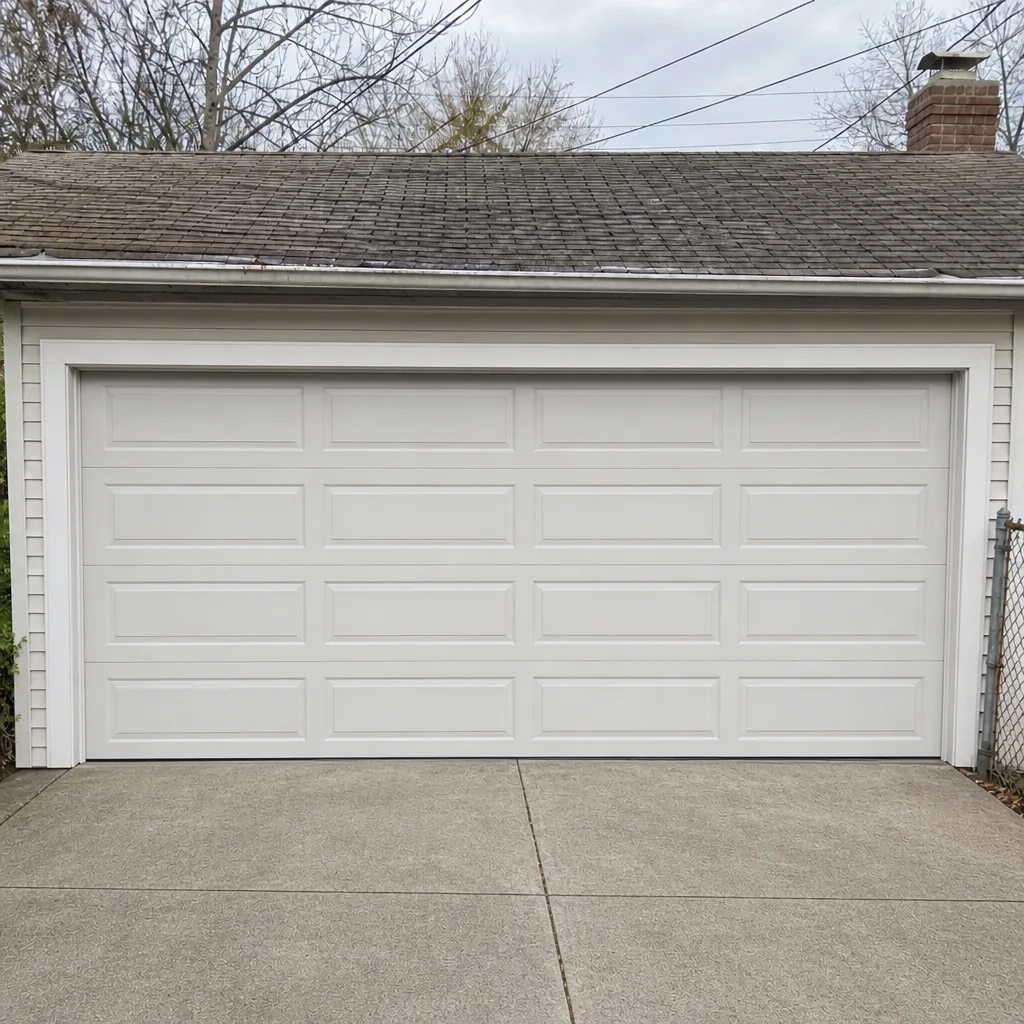
See the difference
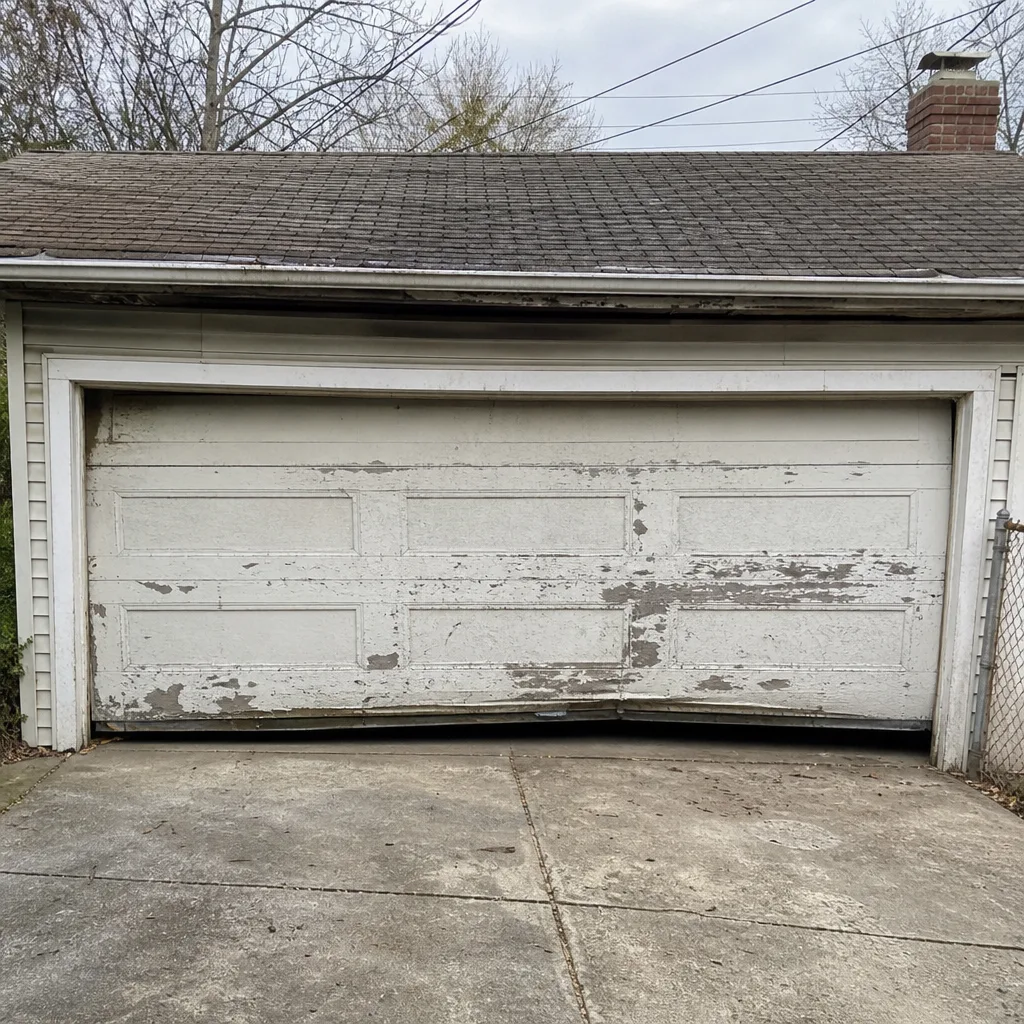 Before
 After
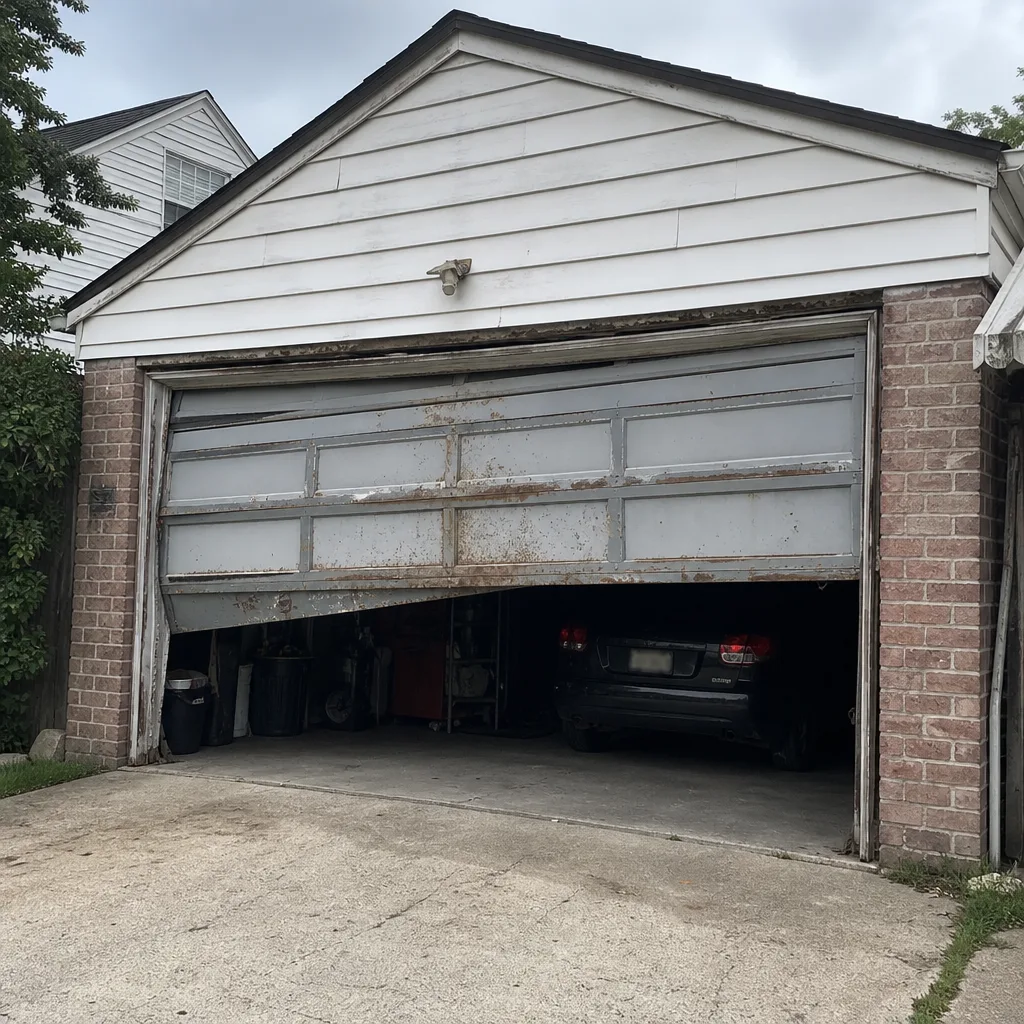 Before
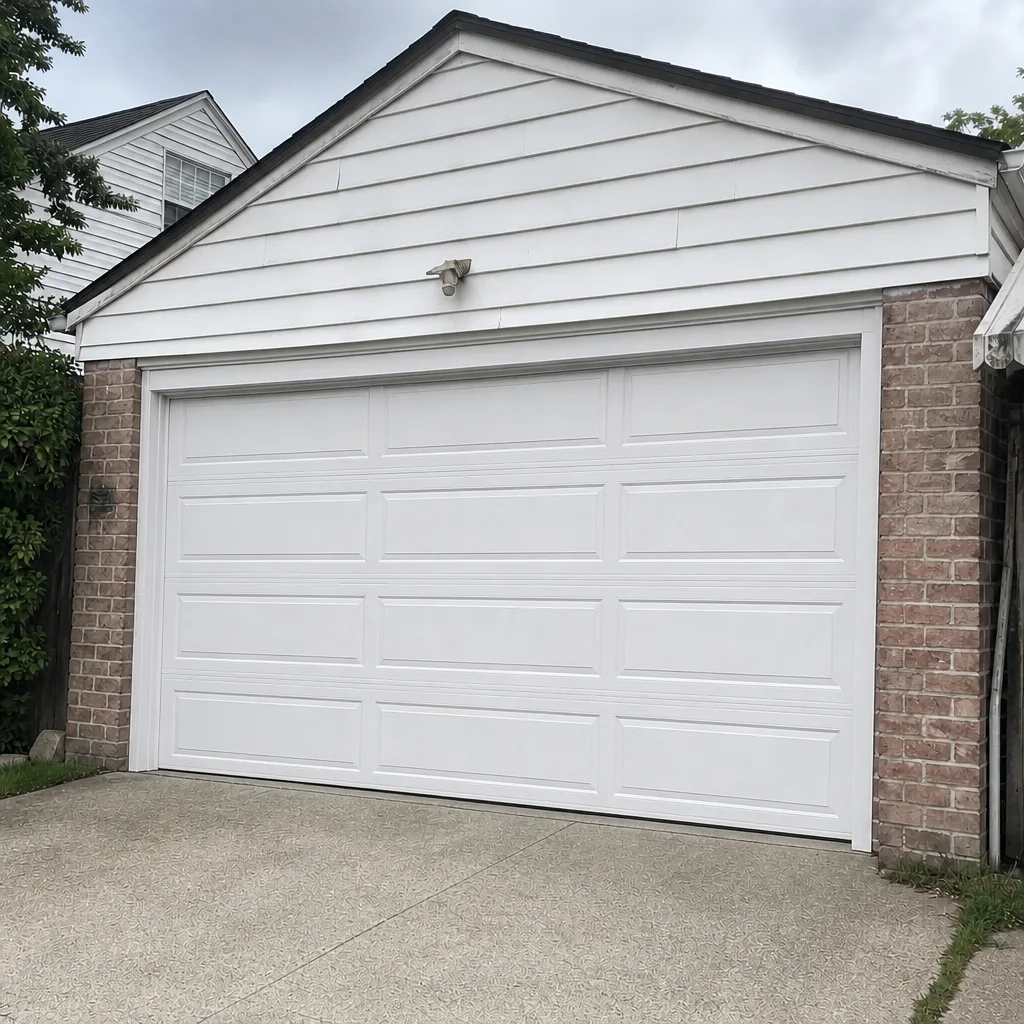 After
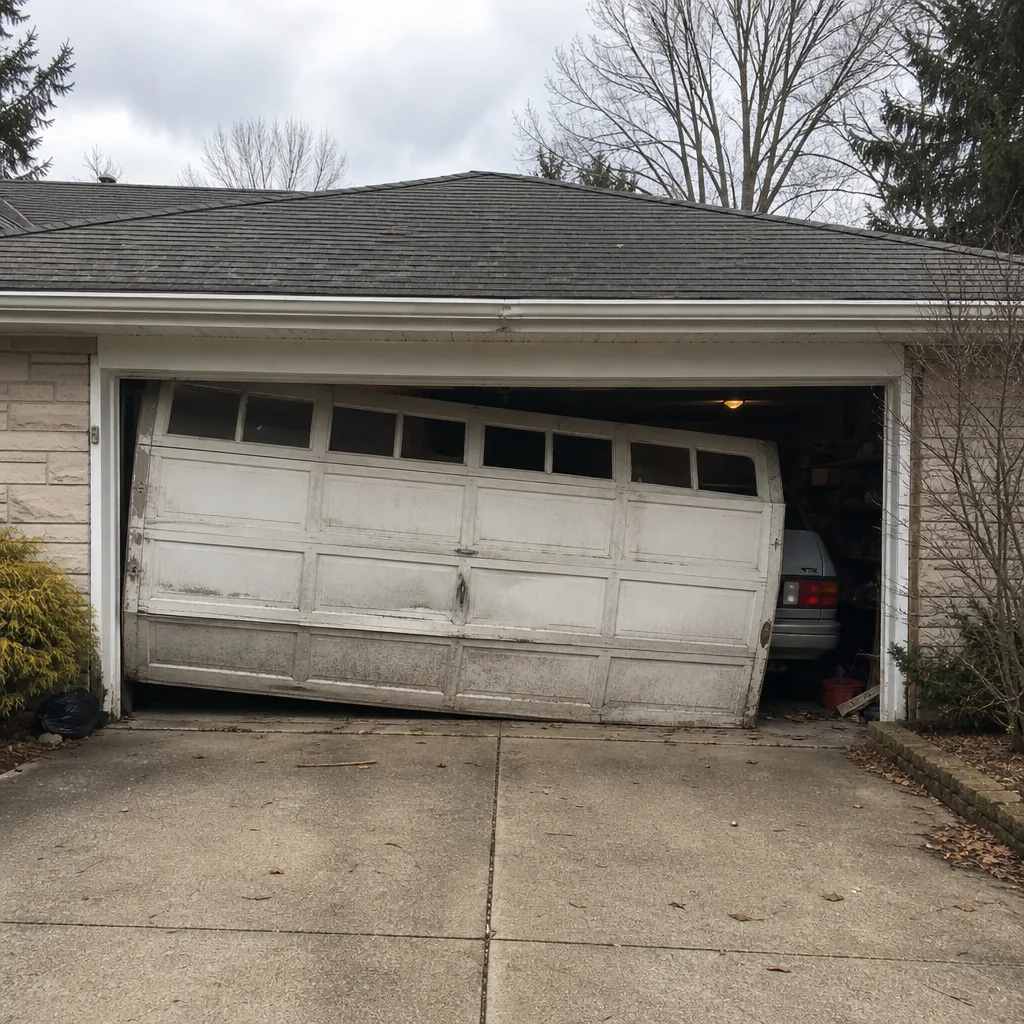 Before
 After
When to Call a Professional
Call a professional the moment the problem involves a spring, a cable, a door that won’t stay on its track, or a repair a previous owner left half-finished. Those are the four scenarios where a DIY attempt stops being a question of skill and becomes a question of safety. Call sooner if the door is on a torsion system and anything is visibly bent or broken. Also call if you simply don’t know which band the job falls into. Our technicians have up to 9 years of experience and work on LiftMaster, Chamberlain, Genie, Clopay, Amarr, Wayne Dalton, Craftsman, and Raynor systems, so most Woodside homes already have a door or opener we know. Garage Door Repair Woodside offers free estimates in Woodside. Call (855) 532-1370. We answer 24/7. Fast dispatch from 7am to 7pm, Sunday through Friday. Emergency or scheduled, we’re ready, and the price is quoted and agreed before any work starts.
Frequently Asked Questions
No. Torsion and extension springs hold the full weight of the door under tension, and releasing that tension wrong can cause serious injury. This is the one job we tell every homeowner not to attempt, regardless of experience. Call (855) 532-1370 for a spring repair estimate; one spring typically runs $180 – $340, and a matched pair costs about twice that.
Weatherstripping, lubrication, sensor alignment, balance and reverse testing, and tightening loose hinge bolts are safe for a homeowner. Anything involving a spring, a cable, or a door that’s off its track isn’t. The dividing line is stored energy: if a part holds the door’s weight or has tension wound into it, leave it to a pro.
Professional repair typically costs $150 – $450 for common jobs, with spring replacement at $180 – $340 for one spring. DIY parts often run a third to half of the pro total, but the jobs worth doing yourself are the small ones. The bigger jobs, like springs and openers, aren’t good DIY candidates. Call (855) 532-1370 for an exact quote, free of charge.
That depends on the work. Most cities require a permit for structural changes, such as widening an opening or moving a header, but not for a straightforward door replacement of the same size. Ask the city’s building department to confirm what applies to your home before the job starts. It’s a short call that prevents a longer headache.
It can, particularly if the work caused damage to your home or a neighbor’s, or if the insurer finds the repair wasn’t done to standard. Documented professional work is treated differently from a homemade repair. If the job involves a spring or a structural change, the policy implications alone are a reason to call a pro.
Often yes, for same-day repair. We handle emergency garage door service as a core part of what we do, not an upcharge. Call (855) 532-1370. We answer 24/7. Fast dispatch from 7am to 7pm, Sunday through Friday. A call outside dispatch hours is booked into the next opening. For a full new-door install, we schedule a measure and a written price rather than promising same-day service.
The Bottom Line
The DIY-versus-pro question for a Woodside garage door isn’t about whether you’re handy. It’s about stored energy. Weatherstripping, lubrication, sensor work, and visual inspection are worth doing yourself and save real money. Springs, cables, and any repair on a door that’s off-track belong to a trained professional, and the cost of skipping that line is measured in injury, not dollars. Woodside’s tight driveways, shared walls, and overhead clearance make the big jobs harder than they’d be on a suburban lot, and NYC’s permit and insurance rules make the paper trail matter. Do the safe tasks, prepare for the pro visit, and call for the rest. One call covers it.
For a free estimate on any garage door job in Woodside, call (855) 532-1370. We answer 24/7. Fast dispatch from 7am to 7pm, Sunday through Friday. The price is quoted and agreed before any work starts, and our technicians have up to 9 years of experience across LiftMaster, Chamberlain, Genie, Clopay, Amarr, Wayne Dalton, Craftsman, and Raynor systems.
Written by the team at Garage Door Repair Woodside.